Sunday, May 23, 2010

The Shifting Fog (The House at Riverton) by Kate Morton

A few weeks ago, I blogged about my intention to read The Shifting Fog over my birthday weekend, at the cottage. As is so typically me, I created in advance an idyllic situation where I would be reading lakeside while all around me cute Disney-like creatures would scamper and play. My children would enjoy each other's company and my husband would suspend 'FIN' night in honour of this special occasion. (Yes, some married couples keep things romantic with a weekly date night, but not us. We have FIN. Each Friday I have Financial Interrogation Night to look forward to. This wonderful evening begins with my husband updating our bank book and bringing it home. After dinner, we retire to the living room with our coffee. I sit facing him - this new rule was added after I would not make eye contact during the whole "cash back on the grocery receipt is not necessarily Judy's spending money, please look me in the eye fiasco" and he proceeds to grill me on all of the withdrawals from the past week. Whether or not they are my withdrawals or his, I am held entirely responsible. I am the impulsive one. I am supposed to keep receipts. Most weeks I lose it by the rapid fire round. I crack under the pressure.

"Yes, I had two five dollar Green Tea Latte's this week and and I attempted to slide the $50 of scrapbooking merchandise past you as feminine hygiene products. It's the new millenium Ebenezeer, get over yourself!" Finally we conclude with a little talk on the difference between "wants and needs" and I stare him directly in the eye, well as best I can as I simultaneously roll them into the back of my head. But, oh, the passion! Who needs a night out when I can remain in the comfort of my own home and learn all about modern day debtor's prison.)


Here is what I actually wrote in that blog post:


"My birthday is coming soon and with it my first trip to the cottage. The grounds will be green and the lake the stormy blue of springtime. Loons will proudly parade their new babies up and down the north and south shores and the temperature will be cool enough that I can wrap myself up in a quilt as I watch them glide majestically by. I may not be able to read on the dock as I generally love to, because the spring also is host to the birth of an endless variety of small biting, stinging insects (Always keep mouth closed in boat). For my birthday, it's usually the black flies, so I will wrap myself up in the screened room where I can read and watch the lake in all its splendor. My birthday present to me will be The Shifting Fog.*
*Note to Wayne: I know you sometimes read my blog. This is not to be taken literally. This is my "reading gift to me" and this statement is under poetic license and cannot be used against me to excuse gifts (like perhaps an ipad, flowers, chocolates..)."

Here is what transpired:

It was pouring rain when we finally arrived at the marina around 10pm on Friday night. Jill went to get the life jackets out of the boat and discovered little padlocks were securing all the compartments (Captain Safety in another moment of inspiration). So Captain Safety whispers the secret combination to open these treasure troves (no one but the Disney Creatures around for miles) and we set about to opening them. But it was so dark, and the baby padlocks were so tiny, that not one of us could read any of the numbers. Our boat is in a covered slip so we had some protection against the elements but I had found the one space where the beams were letting rain droplets the size of goose eggs bomb me from above. Now, all boats are required to have a light source aboard and I know that we keep a big flashlight on ours, but Captain Safety had secured this in the treasure trove along with our Canadian Tire life jackets and orange raincoats. So the kids came to the rescue by using the ambient light from their ipod's. We painstakingly began the process of spinning the tiny wheels of the lock (even worse than my big fingers texting on a blackberry - I look back at the text and think, where did all those extra letters and symbols come from?). We each took a turn spinning the wheels or holding the ipod close to the lock. Jill finally got one opened and we had life jackets. Captain Safety worked on the other and after persevering for at least 3 minutes, smashed open the ultra secure tiny baby padlock with his pinky finger. Aaaah, now we had raincoats. Well, we had two raincoats. So these went to our two children (keeping the peace, these teenagers were less than impressed with coming to the cottage for a quiet weekend in the first place). Yet, as I watched them put them on, there was a brief moment when I felt that just maybe I could devour my young for warmth. It passed, and I used some extra life jackets (the ones we have all abandoned because once we saw a dock spider on them and are now convinced that they nest in them kind of thing) to cover myself with. Captain Safety said "I'm good" and did not require any extra protection against the elements.

We decided that the rain was not going to let up and that we would just have to bear the ride the best we could. It slowed us down considerably. There was no moonlight to help guide us and very few cottagers on the lake with their properties lit up. We leisurely crawled up the lake while being pelted by icy torrents of rain. There were no loons calling or owls hooting, even our dog was too miserable to bark at everything that moves. When we reached our dock, we were soaked to the bone, tired, hungry and cold. Very, very cold.

The next morning I awoke to the pleasant sound of the continuous torrential rain. It was too cold to sit in the screened room. Besides, the view was still obscured by the heavy plastic sheets that wrap the room for the winter months. Hard to believe that Wayne had been up twice in April to open up and came back both times sunburned and informed me in his best Food Network voice, "Bring foods that can be cooked by crockpot because we don't want the cottage to get too hot." Yes, thank-you, Mr. Ramsay.

The morning rain became sleet, and then the sleet became snow. SNOW. Not little melting crystal like flakes, but the kind that actually coat the ground snowflakes. Accompanied by the kind of Ontario winds that even Laura Ingalls could appreciate. I felt like little Half-Pint when I made my way back from the outhouse. I wanted to tie a rope around my waist and call, "Pa, I've milked the cow, pull me back in from the barn!" However, Captain Safety draws a line between safety and comfort and wasn't willing to take drastic measures. He made one announcement to the family that the deck was very slippery due to the freezing rain that was now covered in snow which made it quite dangerous, and would we all be careful, etc. He then absolved himself from responsibility and went down to the dock to play with some 2x4's and noisy tools for the rest of the day in his T-shirt and shorts. The Canadian man in his element.

All Disney-like creatures on the lake were unavailable for comment, including the bugs. I turned on the oven and put lunch in to bake (I have been known to not take Captain Safety's well intended advice) and thought, I'm going to crawl back into bed and read The Shifting Fog. Nothing can spoil my birthday/Mother's Day weekend. Unless, of course, technology fails you.

My Sony e-reader has shorted out exactly twice in the year that I have had it. Both times at the cottage. Now, I purchased the ac adapter for this very reason and both times have left it at home. Sometimes, my personal lightbulb burns very dimly.

Needless to say, it felt like the longest build-up to read a book ever. I finally read it the following week and I enjoyed it very much, but not quite as much as The Forgotten Garden. And a large part of this is my own doing. It's all in the build-up. Because I read The Forgotten Garden first and adored it, I believed that this one would be even better. It may also have been the reading order. The Shifting Fog was Kate Morton's first novel and The Forgotten Garden her second. The stories share many similarities and I may have said the opposite had I read the books in that order. Nevertheless, a great read.

The Shifting Fog takes the reader back in time to Edwardian England to unfold the mystery of the death of a young poet on the grounds of Riverton Manor during a summer house party in 1924. The story is told in flashback by Grace Bradley, the 98 year old former maid at Riverton. Grace has kept her secret a lifetime and knows she is racing against time to tell it before it is too late. Her memories are spurred by the upcoming movie about the events of Robbie Hunter's death so many decades ago, and the visits she receives from the movie's director, Ursula.

The story begins with Grace's mother sending her to work in the big manor house that she once worked in. Young Grace quickly becomes mesmerized with the Hartfield family and in particular the siblings, Daniel, Hannah and Emmeline. She also is befriended by the household staff and learns about life in 'service'.

The siblings grow into adulthood during WWI and are introduced to the charming poet, Robbie Hunter, by their brother Daniel. Both sisters are attracted to him and the reader can infer that the secret that Grace has kept with her a lifetime has to do with his suicide and the fact that Grace and Emmeline never spoke again after that night.

Grace develops a close friendship with the footman, Alfred. He decides to go off to war and soon reveals that he was not meant for a life tending to the whims of the aristocracy. The war changes the decadence of the early 1900's and threatens the class structure of society. Grace must make a decision about her devotion to the Hartfield family and her independence.

And she must live with her decision for a lifetime.

Kate Morton's website has much to say about the contemporary gothic and the confessional narrative. It is an excellent site to visit to not only get a book summary but also to catch a glimpse of her writing process and gain some insight into how her stories germinate.


It will be very hard while I await the release of The Distant Hours, not to build-up this third Kate Morton novel in my mind.

Video clips of Kate Morton discussing The Shifting Fog/The House at Riverton and The Forgotten Garden.


Tuesday, May 4, 2010

Teaser Tuesdays

Miz B and Teaser Tuesdays asks you to: Grab your current read. Let the book fall open to a random page. Share with us two sentences from somewhere on that page. Be careful not to include spoilers. You also need to include the title and author of the book that you're getting the "teaser" from... that way people can add it to their TBR lists if they like the teaser you've given.

This week's teaser comes from one of the funniest books I've read in a long time, Are You There Vodka? It's Me Chelsea. I needed a light read and it feels good to laugh.

*"I thought I was completely too cool for my classmates, and couldn't comprehend how they could hang out at malls on the weekend. I much preferred spending romantic weekends in Hoboken with my twenty-one-year old accountant boyfriend who would wine and dine me at T.G.I. Fridays. I had no involvement with any extracurricular activities at school, mostly because the one time I tried out for cheerleading I was summoned to the nurse's office the next morning to be tested for scoliosis." (Big Red)

*These were probably the only 'appropriate sentences' I could find in the book that I'm willing to post on my blog. She is often distasteful, profane, and absolutely politically incorrect, but she is a comedian. And she is hysterical funny, not snicker-snicker funny but donkey-honkin' funny. And so I can forgive much of the inappropriate in the spirit in which it was written - to entertain.
Sometime's book jackets and summaries can be a bit misleading. They often tell you how fabulous a book is and how many awards it has won, but sometimes they fail to include some pretty important "need to know" information prior to reading. Case in point. I just finished The Kite Runner. It was on my TBR 2010 Challenge list and I had seen it on many favourites lists for several years.

The front cover reads in bold at the top, "New York Times Bestseller." It is followed by a quote that reads, "This is one of those unforgettable stories that stays with you for years. All the great themes of literature and of life are the fabric of this extraordinary novel: love, honor, guilt, fear, redemption.
It prominently displays "A San Francisco Chronicle Best Book of the Year" award.

Here is the Amazon.com review:
In his debut novel, The Kite Runner, Khaled Hosseini accomplishes what very few contemporary novelists are able to do. He manages to provide an educational and eye-opening account of a country's political turmoil--in this case, Afghanistan--while also developing characters whose heartbreaking struggles and emotional triumphs resonate with readers long after the last page has been turned over. And he does this on his first try.
The Kite Runner follows the story of Amir, the privileged son of a wealthy businessman in Kabul, and Hassan, the son of Amir's father's servant. As children in the relatively stable Afghanistan of the early 1970s, the boys are inseparable. They spend idyllic days running kites and telling stories of mystical places and powerful warriors until an unspeakable event changes the nature of their relationship forever, and eventually cements their bond in ways neither boy could have ever predicted. Even after Amir and his father flee to America, Amir remains haunted by his cowardly actions and disloyalty. In part, it is these demons and the sometimes impossible quest for forgiveness that bring him back to his war-torn native land after it comes under Taliban rule. ("...I wondered if that was how forgiveness budded, not with the fanfare of epiphany, but with pain gathering its things, packing up, and slipping away unannounced in the middle of the night.")


SPOILER ALERT: I would like to add in the bits that this review failed to mention (the unspeakable).

Young Amir watches his faithful loyal friend/servant/ cleft palate brother as he is raped at the age of 12 by a child sociopath. He doesn't just stand by helpless, he lies, plots and manipulates until Hassan eventually leaves the only home that he and his father have ever known. Amir grows up pretty much a pitiful coward who intermittently whines that he does feel some remorse for his uselessness. Hassan grows up to return to the abandoned home of Amir's father to watch over and maintain it. He is forced from the home with his wife and shot in the back of the head in the street. And just to drive it home further, his young son is then taken by ... guess who... the young sociopathic rapist turned sociopathic Taliban pedophile. Pitiful Amir returns to Kabal to make retribution but not before the young boy is scarred for life and ultimately it is the boy that saves them from Aseef. Amir promises to take care of the boy and bring him to a new life in America. At the first sign of a test, about 4 seconds later, pitiful Amir breaks his promise to the boy and the boy slits his wrists in the bathtub. He survives, goes to America where he remains in a catatonic stupor and in the end the reader is supposed to feel triumphant because he smirked.

Don't get me wrong, I thought The Kite Runner was a good book, a decent read. But after wading through three decades of waiting for a jellyfish to go looking for his spine, I just wanted a straightforward tell it like it is, funny story. And I got it.


Tuesday, April 27, 2010

Teaser Tuesdays

Miz B and Teaser Tuesdays asks you to: Grab your current read. Let the book fall open to a random page. Share with us two sentences from somewhere on that page. Be careful not to include spoilers. You also need to include the title and author of the book that you're getting the "teaser" from... that way people can add it to their TBR lists if they like the teaser you've given.

This week's teaser is from The Kite Runner by Khaled Hosseini.

"Lore has it my father once wrestled a black bear in Baluchistan with his bare hands. If the story had been about anyone else, it would have been dismissed as laaf, that Afghan tendency to exaggerate -- sadly, almost a national affliction: if someone bragged that his son was a doctor, chances were the kid had once passed a biology test in school. But no one ever doubted the veracity of any story about Baba. And if they did, well, Baba did have those three parallel scars coursing a jagged path down his back. I have imaginged Baba's wrestling match countless times, even dreamed about it. And in those dreams, I can never tell Baba from the bear." (chapter 3)


Sunday, April 25, 2010

The Distant Hours: A New Kate Morton Coming This Year!

I was reading my favourite book blogs this morning and thanks to Diane at Bibliophile by the Sea I discovered that Kate Morton's third novel, The Distant Hours, is due to be released later this year. Not too long ago I blogged about my love for The Forgotten Garden. I have yet to read The Shifting Fog (The House at Riverton) but fortunately I have it listed as one of my To Be Read 2010 Challenge books. I was "saving" this book for a later read. I suppose my rationale was that Morton has only published two novels and if I raced through the second there would be nothing left to anticipate. But in her blog post, Diane discussed reading the best books first, and the quote under her blog heading explains:


Read the best books first, or you may not have a chance to read them all” --Henry David Thoreau


My birthday is coming soon and with it my first trip to the cottage. The grounds will be green and the lake the stormy blue of springtime. Loons will proudly parade their new babies up and down the north and south shores and the temperature will be cool enough that I can wrap myself up in a quilt as I watch them glide majestically by. I may not be able to read on the dock as I generally love to, because the spring also is host to the birth of an endless variety of small biting, stinging insects (Always keep mouth closed in boat). For my birthday, it's usually the black flies, so I will wrap myself up in the screened room where I can read and watch the lake in all its splendor. My birthday present to me will be The Shifting Fog.*


*Note to Wayne: I know you sometimes read my blog. This is not to be taken literally. This is my "reading gift to me" and this statement is under poetic license and cannot be used against me to excuse gifts (like perhaps an ipad, flowers, chocolates..).


Here is a book blurb that I found on http://www.fantasticfiction.co.uk/:


"Edie Burchill and her mother have never been close, but when a long lost letter arrives one Sunday afternoon with the return address of Millderhurst Castle, Kent, printed on its envelope, Edie begins to suspect that her mother's emotional distance masks an old secret. Evacuated from London as a thirteen year old girl, Edie's mother is chosen by the mysterious Juniper Blythe, and taken to live at Millderhurst Castle with the Blythe family: Juniper, her twin sisters and their father, Raymond. In the grand and glorious Millderhurst Castle, a new world opens up for Edie's mother. She discovers the joys of books and fantasy and writing, but also, ultimately, the dangers. Fifty years later, as Edie chases the answers to her mother's riddle, she, too, is drawn to Millderhurst Castle and the eccentric Sisters Blythe. Old ladies now, the three still live together, the twins nursing Juniper, whose abandonment by her fiance in 1941 plunged her into madness. Inside the decaying castle, Edie begins to unravel her mother's past. But there are other secrets hidden in the stones of Millderhurst Castle, and Edie is about to learn more than she expected. The truth of what happened in the distant hours has been waiting a long time for someone to find it... "


Kate Morton's journal page reveals that The Distant Hours will be available in the US, Australia and the UK in November of 2010. Merry Christmas to me! Merry Christmas to me! *


*Note to Wayne: I know you sometimes read my blog. This is not to be taken literally. This is my "reading gift to me" and this statement is under poetic license and cannot be used against me to excuse gifts (like perhaps an ipad, flowers, chocolates..).


Here is a cool little book trailer that really sets the stage beautifully for the feel of Kate Morton's writing.


The Distant Hours from Kate Morton on Vimeo.

Tuesday, April 20, 2010

Angela's Ashes

Frank McCourt died last summer and I remember thinking, "I really need to read Angela's Ashes." I'm not one to venture out of my fictional comfort zone and I think that I kept this memoir shelved for years for fear of it's despair. I had watched Daniel Day Lewis in My Left Foot and that was about as much of "Ireland impoverished" as I could take. Even the cover photo was haunting, a little black and white boy in pantaloons staring at me with eyes that screamed, "I've lived through worse than you will ever know." So, a decade had passed and I kept finding reasons not to read this Pulitzer prize winner.
I want Ireland to be emerald green and steely blue, a place where sheep are herded over cobblestone lanes just home from the fields, where fairy circles abound and smiling men drink Guinness in authentic Aran sweaters while their women named Brigid, and Maeve, and Kathleen, dust the Waterford crystal and starch the doilies they sit upon. Basically, the Ireland of the "Irish Spring" soap commercials -"Manly, yes, but I like it too!"

(With Grandpa at the cottage, 1968)
My grandpa came from Ireland to Canada in 1913. Our family lore recalls that his family originally had booked passage on the Titanic and according to differing recollections (someone was sick and unable to travel, a sister was not finished her job) all agreed that my great grandmother stood firm and said, "We either go to Canada as a family, or we don't go at all." Needless to say, they remained in Tullamore and booked passage on a ship shortly after the sinking of the Titanic. My grandpa never returned to his homeland and I often wonder if he would have liked to. He died when I was only five and there are so many questions I would have liked to ask him. I do know that a sign still hangs over the family cottage that reads, "Erin Go Bragh." My sister traveled to Ireland on business a few years back and was able to visit my grandpa's home. It had passed into only one family since the Molloy's left in 1913 and was virtually unchanged with the passing of nearly a century. She brought mom back some pebbles from the property and several "priceless" photos.

Frank McCourt's Ireland of the 1930's -40's was much different than my colouring book imagination. It was sparse and grey and damp and starving. There were no rainbows or Leprechauns in sight. It was poverty and religious tension and disease and death and abuse and alcoholism and war and dreams and hope. And it was a tremendous read. I am amazed with the amount of recall and detail that McCourt enlisted to breathe life once again into his boyhood in both Brooklyn and Limerick. Especially once discovering that he wrote the memoir after his retirement from teaching. I grew up being guilted into finishing my vegetables out of respect for the starving children in Africa and China who would have happily ate creamed corn courtesy of the Jolly Green Giant. I had not really experienced poverty until McCourt took me into his childhood home with it's one bed infested with fleas and the community latrine and the boiled pig's head for Christmas. His story helped me understand the true differences between warmth and cold, damp and dry, health and sickness, and love and neglect.

I've heard that McCourt has his critics in Limerick city. Likely, they are unhappy with the portrayal. This book though is about Limerick as seen and remembered through the eyes of young Francis McCourt. A memoir is one's own point of view as influenced by their experience and memory. So, it may not necessarily be everyone's truth; the truth as known to those closest to him. It would be a different story I am certain if told by Angela or Malachy. A favourite professor of mine is fond of quoting, "We all have our own mother" and I'm sorry that I can't remember who owns that quote, but I think it really sums it up. We see people and events and history through our own eyes and our versions are therefore unique.

The book is rolling full steam ahead as McCourt returns to America as a young man and then abruptly ends. Just ends, with the word, "tis." I thought I had a misprint. I checked to see if pages were missing. Boom, like hitting a brick wall, it stopped. But, there is another book. And it is called, Tis. I can't wait to read it.

Monday, April 19, 2010

Her Fearful Symmetry

Audrey Niffenegger's second novel, Her Fearful Symmetry took me by surprise. I wasn't expecting to really like it. In fact, I wasn't expecting that I would even read it.
I was definitely one of those readers in the minority with The Time Traveler's Wife -- just not that into it. Couldn't get past the whole bit of the naked grown man popping in on his future wife at six years old part. I found Henry to be moody, depressing and completely self-absorbed. I wanted to shake Clare and tell her, "You could do so much better than that old Dougie Downer!" "Dear God, woman, they've chopped his feet off now!" Truth be told I was relieved when he died, until I realized that their daughter had inherited Henry's "affliction." Poor Clare the martyr, poor weird daughter. To me, not so much a dreamy romance.

What made me pick this story up? First, the title.
A line borrowed from William Blake's The Tyger. From Songs of Innocence and Experience: Songs of Contrary States of the Human Soul (Songs of Experience)
Tyger, tyger, burning bright
In the forests of the night,
What immortal hand or eye
Could frame thy fearful symmetry?
The Tyger has a companion poem, The Lamb (Songs of Innocence)
Symmetry was an interesting concept for Blake who used opposites as "sames." Day cannot exist without night as good cannot exist without bad for example. They are two sides of a same so to speak for they serve to define the other. (Yes, I am aware that Blake laid it out more eloquently.) So what does the title allude to? Why "her" fearful symmetry?

I would discover that this story begins with a death and a mysterious inheritance. Two young American twins (not quite identical in the sense we understand it, but symmetrical, their bodies mirror each other's - Valentina's heart is on the opposite side of her sister Julia's, etc) are lured to England to inherit the estate of the aunt they never met, their mother's twin sister.
The inheritance comes with a stipulation. The twins must live in their aunt's apartment for a year before they can sell it. The apartment backs onto Highgate Cemetry, final resting place of their aunt, Karl Marx, George Eliot and Christina Rossetti.

During their year in the apartment, the sisters are introduced to the other tenants, obsessive compulsive Martin, the grieving (and also obsessive) Robert- the cemetery's tour guide, and a ghost who cannot let go of the past.

I really enjoyed this novel. Most likely because it contained all the elements of a contemporary gothic story; wealthy family with lots of skeletons rattling in their closets, mausoleums and a famous cemetery, inheritances, twins and identity confusion, obsessive love, and ghosts. The creepiness, which became creepy-exteme as the novel raced to it's conclusion, worked for me with this novel where it did not with the author's first. It was not the ending that I would have expected and honestly, not what I was hoping for, but, it really worked for the story. A good, and fairly quick, read.

Monday, April 12, 2010

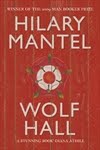
Wolf Hall Wore Me Out!

Well, my course work is done for awhile and I can concentrate again on my blog posts. I have been reading, but found that I just couldn't settle in with a novel. It feels like I have been reading The Tenant of Wildfell Hall forever, and in truth, I've probably abandoned it. I became impatient with it and vowed that I would see my next selection through to the end.
I read Wolf Hall by Hilary Mantel. I'm not sure what led me to this book because it is not listed on my Tudor Challenge list and I felt quite guilty for reading this before the others. I had read many positive reviews about the novel and saw that it won the Man Booker prize. It was an impulsive choice. I was influenced by the award thing. (I am also the lady in the grocery store who buys any magazine that announces on the cover "Lose 10 lbs in two days with no exercise!" I then find out on p. 43 that I have to live on water, cayenne pepper and lemons for 48 hours.)
The novel is roughly 76 892 pages long. It painstakingly chronicles the influential role of Thomas Cromwell as King Henry VIII's right hand man through the years of his divorce from Catherine of Aragon (and ultimately the Vatican) and marriage to Anne Boleyn. I finished the novel because I vowed not to be impatient again. It exhausted me. I also now for the first time in my forty-three years wear glasses for reading. Of course, this may be purely coincidental.
For me, the first part of the novel where we learn about Cromwell's life as a child with an abusive father, was the best because it was told as a story. The scenes were vivid and the plot and transitions were clear. I was transported to England in the 1500's. I flew through these pages of his childhood and began to feel secure that the entire novel would read this way. In the following section Thomas Cromwell is reintroduced to the reader as an adult and this is where I started to get tired. The detail crept in and the scene and character transitions were more difficult to follow. I had to constantly flip back and forth to the list of characters to help me figure out who was speaking. I had to google. I used wikipedia. Yes, this novel was way too smart for me. It is for very serious people. Very serious readers. Uber smarty panters. It became more of a history text for me and less of a story. Important events in history strung together on Thomas Cromwell's clothesline.
I felt weighed down by the extraordinary attention to detail, facts, dates and people. Like swimming in a sea of thick vanilla pudding, plenty of substance, but all of it bland.
I like chocolate pudding. I like Ken Follett. I wanted this to be like a new Pillars of the Earth. Give me Tom Builder's story anyday. I'm going to read Philippa Gregory but need to take a break from Tudor England for just a little while. I've spent too much time in the Tower of London lately.